


Keynote Speakers
We are very pleased to have acquired the services of an excellent selection of keynote speakers for the symposium The speakers and the titles of their talks are shown below.
Yoshimasa Masuda
California State University, USA and Keio University, JapanAI Strategy and Enterprise Architecture for Sustainable Innovation extended toward Ecosystem Societies
More details ...
Ivana Podnar Žarko
University of Zagreb, CroatiaOrchestrating Hierarchical Federated Learning Pipelines in the Edge-to-Cloud Continuum
More details ...
Beata Zielosko
University of Silesia, PolandWhen Decisions Are Blocked: Learning Inhibitory Rules from Tree Ensembles
More details ...
Yoshimasa Masuda
California State University, USA and Keio University, JapanAI Strategy and Enterprise Architecture for Sustainable Innovation extended toward Ecosystem Societies
Abstract:
Global enterprises and information societies are experiencing incessant changes, factors including the rise of new information technologies, Artificial Intelligence (AI), globalization, and innovative business models. Recently, AI strategy and digital transformation have had a profound effect on existing businesses, ecosystems, and economies. The latest developments in Digital IT, especially AI have set new trends in information technology that are essential for sustainable innovation in enterprises. These developments have led to new IT trends, such as Generative AI, Digital AI Healthcare Platforms and Robotaxi, etc. which are shaping a digital economy filled with both opportunities and challenges. To remain competitive, businesses must innovate or risk being left behind. Therefore, the “adaptive integrated digital architecture framework (AIDAF) – second edition” for AI strategy and Digital Enterprise Architecture is expected to promote, design, and implement the AI Digital platforms in a number of industries additionally. Furthermore, because enterprises began to undertake AI strategies in Digital Transformation and Enterprise Architecture these days, Digital Economy has become crucial aspects for planning appropriate ways of AI strategy and digital transformation in analytical manners.
In this talk, first, I introduce that several cases of AI strategy and digital business with platforms for Sustainable Innovation and related enterprise resource management (ERP) with AI are planned, designed and proceeded in an alignment with Digital Transformation and Enterprise Architecture covering Digital Economy’s perspective. Whereas, I explain how to apply the AIDAF second edition covering AI Platforms and Design Thinking Approach with Risk Management involving the case of the California State Government in the US and JDA. Finally, I introduce the AIDAF with the ecosystem level of digital healthcare platforms, AI Hospital Strategy and the directions of digital AI strategy and platforms with the AIDAF extended to ecosystem societies, as the latest trend.

Biography:
Yoshimasa Masuda is Visiting Professor at Graduate School of Management Information Systems in California State University, Sacramento and Graduate school of System Design Management, Keio University (specially appointed), while he has been Teaching Faculty, Instructor at Carnegie Mellon University – ISR (Institute for Software Research) since 2021, and Professor at School of Management in Tokyo University of Science. He has more than 14 years' experience in enterprise in many industries. He earned a Ph.D. degree in Keio University. He had experienced many global projects, international assignments in IBM. He started up the global enterprise architecture in Global Pharmaceutical company and worked as Sr. IT Director in Global Robotics company in 2019, and started the “Global Digital Strategy Consulting” in NTT Data group, Management Consulting as Senior Management. He completed the Executive Education (MoT) in MIT in 2011, and he has joined Carnegie Mellon University since 2018. He was selected as “Distinguished Member” of AIS (Association for Information Systems) in 2021 and he is currently Vice President of AIS-SIGLEAD since 2024. His research interests are enterprise architecture in Digital era toward Ecosystem Society in the AI era, AI strategy and digital transformation, digital healthcare, IT management. Yoshimasa Masuda is author of the successful AIDAF – Adaptive Integrated Digital Architecture Framework and the book Enterprise Architecture for Global Companies in a Digital IT Era, from Springer Nature. He published the second edition of the above AIDAF book in August in 2025, that covers AI platforms and Design Thinking approach, etc. He got the “Global Achievement Award – Innovative Solutions Award 2021” from worldwide ISACA, by establishing the AIDAF framework in 2021, and he received the “Outreach Practice Publication Award” from Global AIS in December in 2022.
Ivana Podnar Žarko
University of Zagreb, CroatiaOrchestrating Hierarchical Federated Learning Pipelines in the Edge-to-Cloud Continuum
Abstract:
Federated Learning (FL) enables distributed learning while preserving data privacy, as data remains local on devices performing the training. However, standard FL pipelines rely on a single cloud aggregator, which often results in high communication costs and poor global model convergence due to data heterogeneity. Hierarchical Federated Learning (HFL) introduces an intermediate layer of edge servers to aggregate subsets of client models before communicating with the global cloud aggregator. This multi-tier architecture can significantly improve communication efficiency, making HFL pipelines ideal for the Edge-to-Cloud Continuum (ECC).
This talk explores the transition from static FL deployments to adaptive orchestration of HFL pipelines using the AIoTwin Orchestration Middleware, an open-source framework built on Kubernetes and the widely adopted FL framework Flower. We will examine how automated orchestration addresses the dynamic nature of the ECC by managing varying client resources, fluctuating bandwidth, and frequent node failures. The AIoTwin approach uses continuous runtime monitoring of both infrastructure health (e.g., node failures and network conditions) and the ML performance of running HFL tasks (e.g., model accuracy and convergence rate) to provide runtime adaptability and autonomous reconfiguration actions. Reconfiguration is driven by objective-based optimization, which aims to maximize model accuracy while adhering to constraints such as predefined communication or energy cost budgets. Selected evaluation experiments will demonstrate how the orchestration middleware enables the deployment of decentralized intelligence at scale in cross-domain and dynamic Edge-to-Cloud environments.
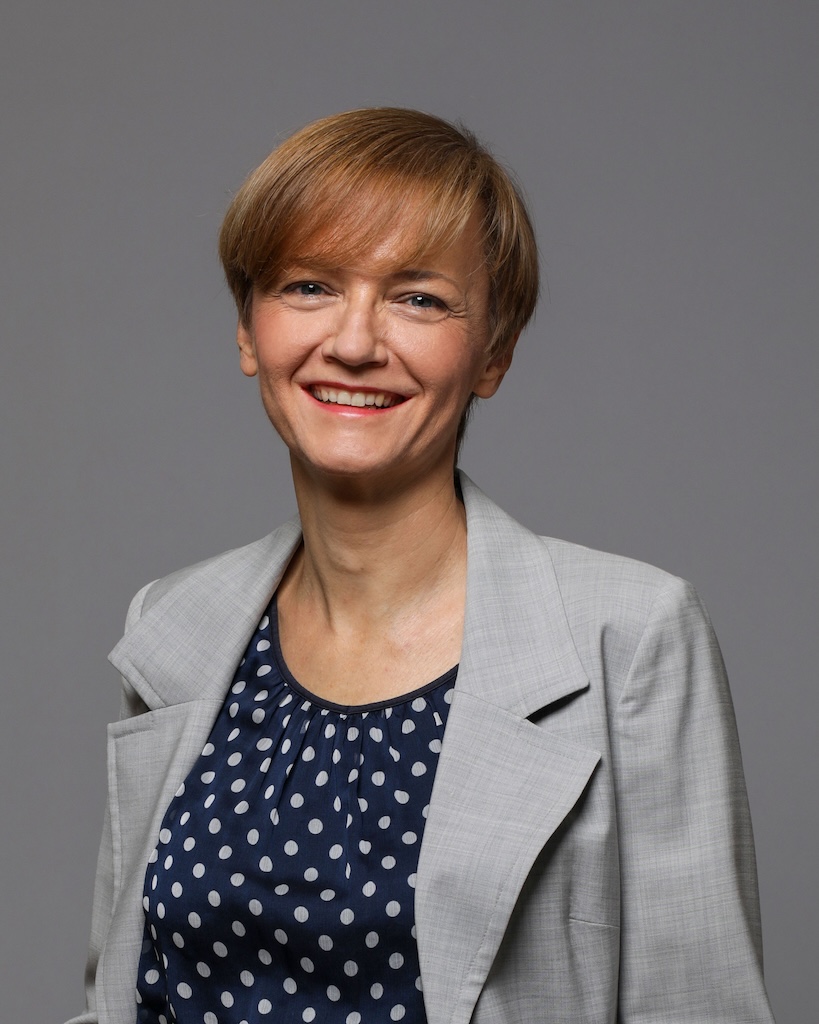
Biography:
Ivana Podnar Žarko is a Full Professor at the Faculty of Electrical Engineering and Computing, University of Zagreb, Croatia (UNIZG-FER), where she teaches courses on distributed systems and the Internet of Things. She was promoted to Full Professor in December 2017 and is leading the Internet of Things Laboratory at UNIZG-FER since 2015. She was a guest researcher and research associate (2001-2002) at the Vienna University of Technology, Austria, and a postdoctoral researcher (2005-2006) at the Swiss Federal Institute of Technology in Lausanne (EPFL), Switzerland.
Her research interests are in distributed systems, with a particular focus on scalable and decentralized solutions for the Internet of Things (IoT). Over the past five years, she has concentrated on research problems such as artificial intelligence and interoperability for IoT and edge-to-cloud environments, and distributed ledger technology.
Prof. Podnar Žarko has extensive experience participating in collaborative scientific research projects funded by national and European sources and has led six research projects. She recently coordinated the Horizon Europe twinning project AIoTwin: Twinning Action for Spreading Excellence in Artificial Intelligence of Things (2023-2025). She also serves as an invited expert for the Horizon Europe program.
Ivana Podnar Žarko has co-authored more than 85 scientific papers in large-scale distributed systems, IoT, and edge computing. She has served as a program committee member for many international conferences and workshops, including IEEE Globecom, IEEE ICC, IEEE 5G World Forum, and the Global IoT Summit, and was a track chair at the 19th Annual IEEE/ACM Int Symposium in Cluster, Cloud, and Grid Computing (CCGrid 2019). She is a member of IEEE and served as Chapter Chair of the IEEE Communications Society, Croatia Chapter (2011–2014). She received the Award for Engineering Excellence from the IEEE Croatia Section in 2013 and the Science Award of UNIZG-FER in 2020 for outstanding achievements in research and innovation.
Website: https://www.fer.unizg.hr/en/ivana.podnar_zarko
ORCID: https://orcid.org/0000-0001-5619-2142
LinkedIn: https://www.linkedin.com/in/ivanapodnarzarko
Beata Zielosko
University of Silesia, PolandWhen Decisions Are Blocked: Learning Inhibitory Rules from Tree Ensembles
Abstract:
Decision trees and rule-based systems are widely used in various tasks related to classification and knowledge representation. Their great advantage is the interpretable and structured way of modelling decision-making processes. Tree structure facilitates the representation of knowledge in the form of rules, making it easy to understand, analyze, and explain, even for those without expertise in a particular field.
Inhibitory rules complement this approach by explicitly modelling constraints or exceptions that prevent certain conclusions from being drawn when specific conditions are met. Unlike standard decision rules, inhibitory rules have a consequent in the form of: “attribute ̸= decision” and often suggest insights not captured by traditional decision rules.
During the lecture, the challenging problems of extracting inhibitory rules from a set of decision trees will be considered. The proposed method can be applied in scenarios involving multiple local and distributed data sources represented as decision trees, where the goal is to extract knowledge that is important for all these sources and can be used both locally and globally. The main objective is to identify patterns that reflect knowledge common to most data sources, while also being applicable at the level of individual sources.

Biography:
Beata Zielosko works as Associate Professor at University of Silesia in Katowice. She is the head of the research group dealing with decision rules in knowledge discovery and representation. From October 2022, she has served as deputy director of the Institute of Computer Science at the Faculty of Science and Technology of the University of Silesia in Katowice. From 2011 to 2013, she worked as a senior research scientist at King Abdullah University of Science and Technology in Saudi Arabia.
Beata Zielosko is a co-author of four research monographs published by Springer and over 60 papers published in journals and international conference proceedings. She is also a co-editor of the PP-RAI 2025 and IJCRS 2017 proceedings and co-editor of an international monograph on feature selection. She is a member of the International Rough Set Society, KES International and the Polish Artificial Intelligence Society. Her research interests include pattern recognition, knowledge discovery, feature selection, rough sets methods for data processing and artificial intelligence.